BizMetry Resources
In BizMetry terminology, a Resource represents a business asset or object (ASBO — Application-Specific Business Object) that your organization wants to monitor, track, or analyze as part of its observability goals.
Each resource is directly tied to business KPIs and contributes to measuring the success of your strategic objectives.
Concept
A Resource encapsulates the essential entities your business depends on — whether physical, digital, or logical — and provides the foundation for metric tracking within BizMetry.
These are core elements of your telemetry model, as their attributes (numeric or non-numeric) represent the actual measurable business performance indicators.
Resources as Objects of Interest
Resources are the "objects of interest" that BizMetry continuously tracks through telemetry agents and KPIs.
Resource and Domain Relationship
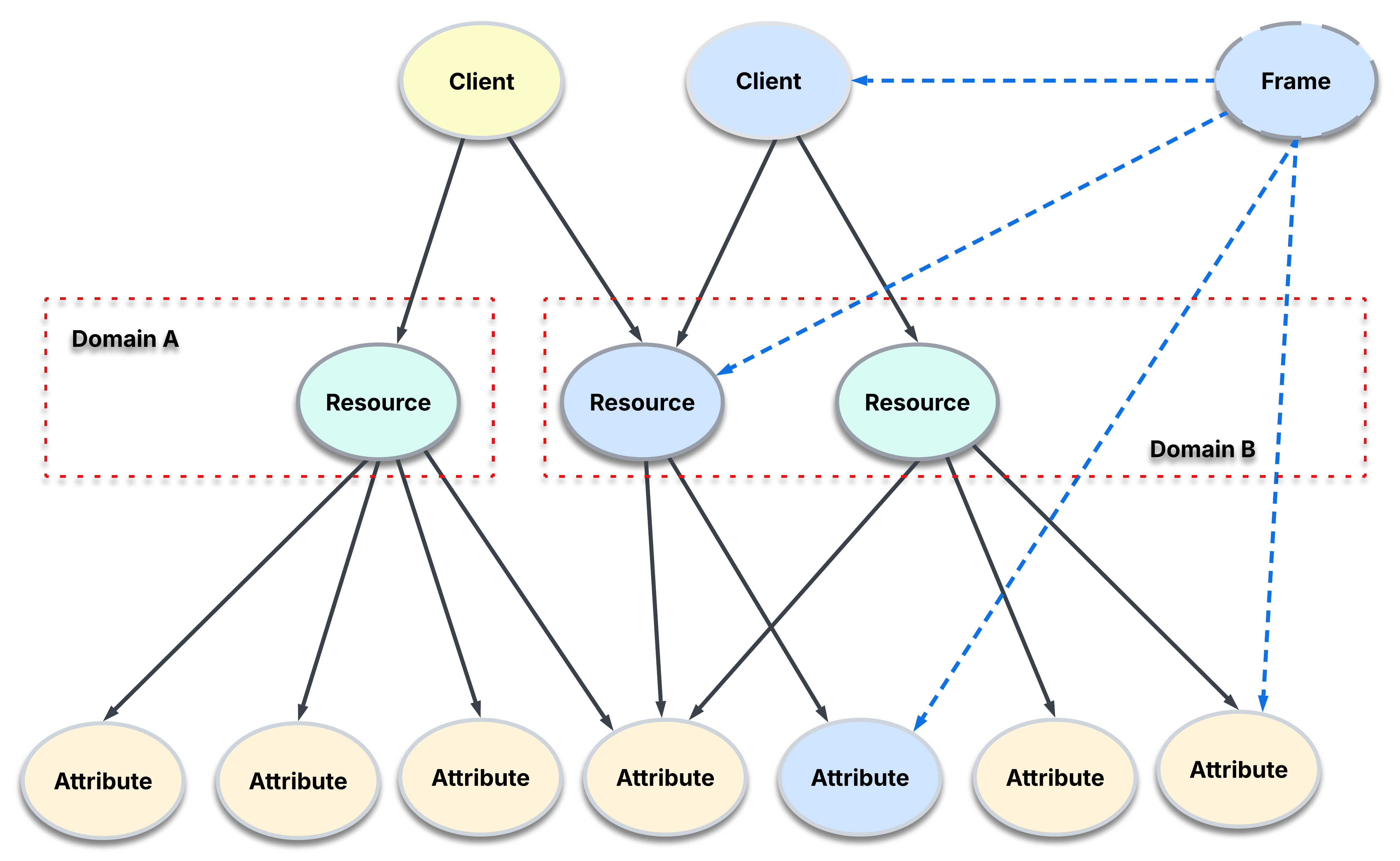
Every resource belongs to a single Business Domain, which defines its context and scope within your organization.
For example:
- A Customer resource belongs to the Sales Domain
- An AI Model resource belongs to the AI Domain
- A Vehicle resource belongs to the Fleet Management Domain
- A Bank Account resource belongs to the Finance Domain
This one-to-one mapping ensures a clear lineage between business entities and the KPIs that measure their performance.
Defining Resource Types
BizMetry allows you to define multiple Resource Types within a Telemetry Template.
A Resource Type acts as a category or logical grouping that aggregates one or more Resources sharing similar characteristics, structure, or purpose.
Benefits of Resource Types
A Resource Type provides a higher-level abstraction that makes it easier to:
- Organize related resources by business logic or operational context
- Filter and analyze telemetry by category (e.g., AI Models vs. Customers vs. Vehicles)
- Associate specific metrics or KPIs with only the relevant subset of resources
- Reuse common telemetry definitions across multiple environments or profiles
Grouping Criteria
A Resource Type groups multiple resources that share a common nature, such as the same origin system, data schema, or business purpose.
Typical grouping criteria include:
- Belonging to the same originating system (e.g., CRM, ERP, AI Hub)
- Operating in the same geographic or organizational region
- Sharing the same business behavior or telemetry patterns
Examples of Resource Types
Each Telemetry Template can have several Resource Types defined — for example:
AIModel,AIPrompt, andAIDatasetunder an AI DomainPurchaseOrder,InventoryItem, andCustomerunder a Retail DomainBankAccount,Loan, andTransactionunder a Finance Domain
This approach provides flexibility and modularity, ensuring that each BizMetry profile accurately represents your business architecture and telemetry needs.
Business Examples of Resources
Depending on your organization's industry and telemetry setup, a Resource may represent:
| Domain | Example Resources |
|---|---|
| Retail | Purchase Order, Inventory Item, Customer |
| Banking | Bank Account, Transaction, Estimate |
| AI Solutions | AI Model, AI Prompt, Dataset, AI Agent |
| Healthcare | Clinical History, Appointment |
| Marketing | Campaign, Catalog |
| Transportation | Vehicle, Fleet, Route, Delivery |
| Manufacturing | Production Line, Machine, Part |
Industry Agnostic
Regardless of the industry, each resource can expose one or more attributes tied to performance metrics — latency, cost, success rate, error ratio, ROI, utilization, etc.
Resource Attributes and KPIs
A Resource is described by one or more Attributes — each representing a measurable aspect of its behavior or status.
Attributes can hold numeric (e.g., response time, sales volume, temperature) or non-numeric values (e.g., status, region, category).
Each attribute:
- Is mapped to a Business Metric or KPI
- Reflects operational or strategic goals
- Enables trend analysis, anomaly detection, and performance tracking over time
Key Capability
BizMetry's main capability lies in connecting these attributes to your high-level business objectives, allowing you to measure progress and make data-driven decisions.
How Clients Interact with Resources
A Client in BizMetry can invoke Resources across one or more Business Domains through real operational actions.
These interactions are what generate the telemetry and KPIs captured by the BizMetry Platform.
Examples of such operations include:
- Creating a Work Order in a service or maintenance system
- Scheduling an Appointment in a medical or veterinary application
- Planning or assigning a Trip in a fleet management domain
- Invoking AI Models (SLMs/LLMs) from AI applications for predictions or chat completions
- Updating Inventory levels in a retail environment
- Creating a New Bank Account in a financial application
- Performing Money Transfers between accounts
- Registering or modifying Customer Data across systems
- Launching Marketing Campaigns or managing Catalog Items
Observability Foundation
These interactions between Clients and Resources form the backbone of BizMetry's observability model — every operation can be traced, measured, and analyzed in terms of performance, cost, and business impact.
Purpose in BizMetry
Resources are the backbone of the BizMetry observability framework. They enable:
- Capturing real-time operational data from distributed systems
- Tracking performance evolution across domains and clients
- Establishing a metric-driven connection between business operations and strategic KPIs
- Providing visibility into the assets that matter most to your business outcomes
Extended Example – AI Chat Completion
In an AI domain, multiple resources participate in a chat completion workflow, and BizMetry captures their telemetry collectively within a single frame.
For each invocation, the following resources and attributes are measured:
| Resource | Captured Attributes |
|---|---|
| Prompt Template | Template ID, Language, Toxicity Score |
| AI Model | Model Name, Version, Self/External Hosted, Tokens (In/Out), Inference Latency |
| Datasets (RAG) | Dataset Count, Retrieval Similarity Score |
| AI Agent | Request Cost (USD), Region, Client ID, Bias Deviation, Completion Time |
BizMetry captures this data just-in-time, either automatically through auto-instrumentation, or manually through its SDK, and ships it via telemetry agents to the BizMetry platform for consolidation and insight generation.
BizMetry Client–Domain–Resource Context
The diagram below illustrates how Resources fit into the overall BizMetry model — connecting Clients, Business Domains, and the BizMetry Platform via telemetry agents and environments.